Tunngasugit!
Let’s get straight into it.
What is Kuujjuaq?
Kuujjuaq is different from any other Nunavik towns. It is said to be the capital of Nunavik. It is titled this way due to it being the largest town in the region. For comparison, let me show you the maps of the three cities I went to this summer.
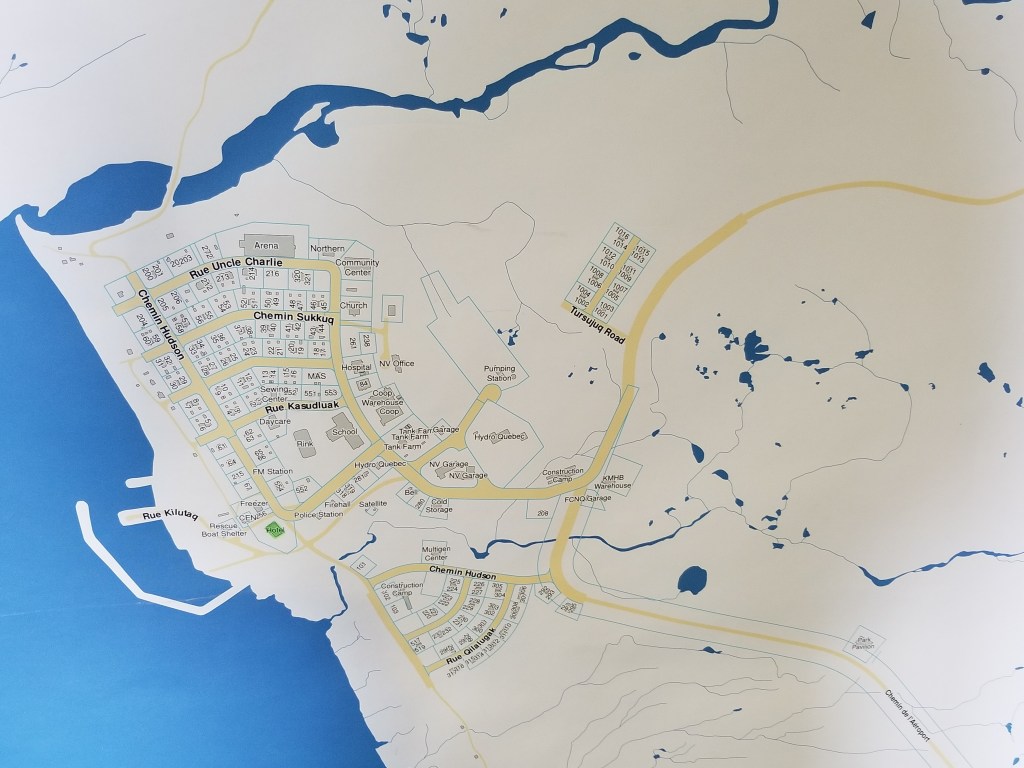
This is Umiujaq, the smallest town I visited. There are no more than 300 homes here. It is centralized next to the coast with only that new development down the road peaking through.
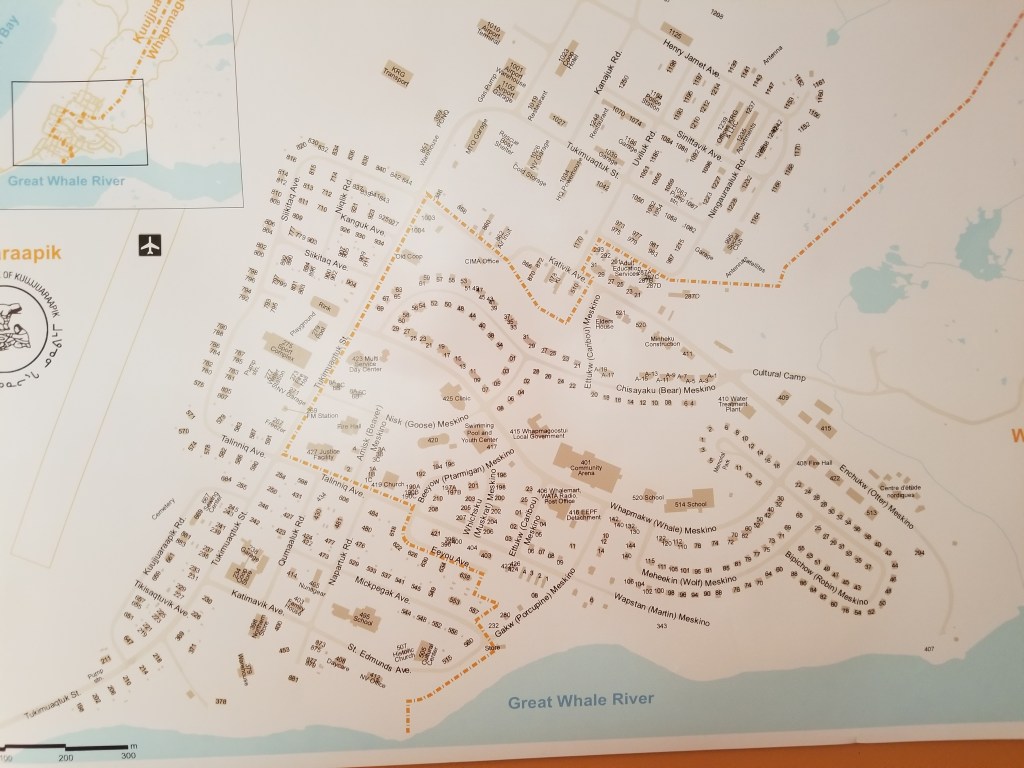
This is Kuujjuaraapik/Whapmagoostui. Now, technically the Whapmagoostui side does not count as it is part of the Cree county called Eeyou Istchee. But, for the sake of the argument, we will count it. This town has around 600 homes, double the size of Umiujaq. It is a lot more spread out, but still compact.
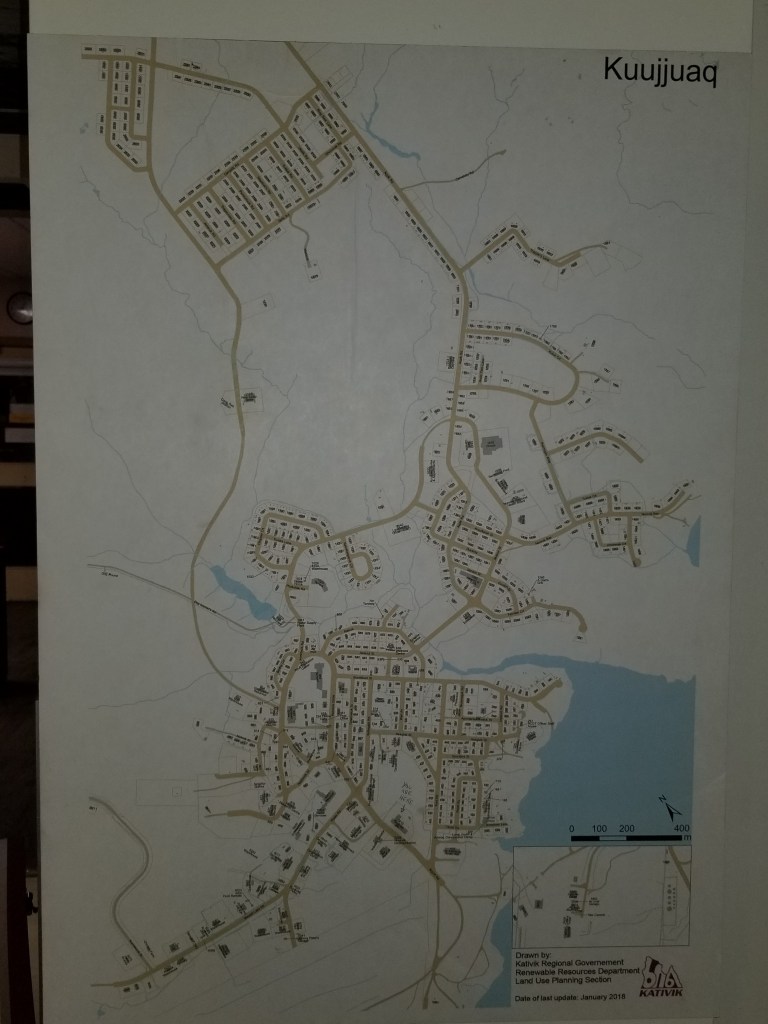
Kuujjuaq, in its full glory. After a month in the previous towns, coming here for the first time was almost a culture shock. Over 1000 homes, with restaurants, hotels, bars and grocery stores. This is what downtown Nunavik looks like. Its growth is mainly due to the fact that Kuujjuaq hosts all the Nunavik government headquarters, which in terms provides for a lot of jobs. Now, let’s take a look at some of those governmental organizations, shall we?
First off, the Kativik Regional Government, KRG for short. This is the overarching government that takes care of transportation, economics, social welfare and other public services. It was established in 1978, just after the implementation of the James Bay and Northern Quebec Land Agreement. I will attempt to explain that agreement later on.
The Kativik Municipal Housing Bureau (KMHB) also has its headquarter in Kuujjuaq. Now, the public opinion on this institution is mixed, and was a center piece for many opinionated conversations I had up north. First, lets explain its purpose. KMHB provides housing to Nunavik residents. It also provides a wide variety of subsidy options for their rentals, but also for building privately owned houses. The mixed opinions regarding KMHB is mainly caused by the fact that Nunavik is facing a housing crisis, which forces the institution to take controversial logistical decisions. I have had accounts of people waiting years upon years to acquire a larger home to accommodate their growing family. Were talking of a family of 6 kids living in a 2 bedroom home waiting 2 to 3 years for a house that would fit everyone. Renovations are also a significant thorn in KMHB’s side as it seems that a majority of rented homes in Nunavik need immediate restorative attention, with black mold being the main culprit.
Other organizations residing in Kuujjuaq include Kativik Ilisarniliriniq (the Kativik School Board) and the Nunavik Regional Board of Health and Social Services. Now, these institutions individually hire hundreds upon hundreds of employees requiring various levels of experience and education. Many of them have resorted to hiring in the South, and that has contributed to a social environment unique to Kuujjuaq.
The Rotation
Kuujjuaq has a unique social environment because of its constant rotation of inhabitants. With all these businesses and governmental institutions hiring from down South, were talking hundreds of people coming and going every year. Consequently, for the locals who have lived there their whole lives, this has been socially tiring. The burn of meeting new friends and seeing them go repeatedly has grown into a social reticence that is unique to Kuujjuaq in Nunavik. Personally, the first week I was in town, I felt that. Eventually, friends were made, no worries about that, but there was definitely a social hurdle to surpass, which is different to the other towns I visited.
This has also grown into a social divide between the travelling working class and the locals. Instances of travelling workers never even speaking with locals and locals being unwelcoming to travelers are common. However, some travelling workers have proven to be quite untrustworthy, with some of them coming to the N1orth with an opportunistic mindset, taking advantage of the wealth, but also the people. This should be more of a concern for leaders in the future as these kinds of social rifts will only grow deeper the larger the city becomes. Considering the many expansions Kuujjuaq has seen in recent years, it will continue to grow.
The Land Agreement
This is another controversial topic.
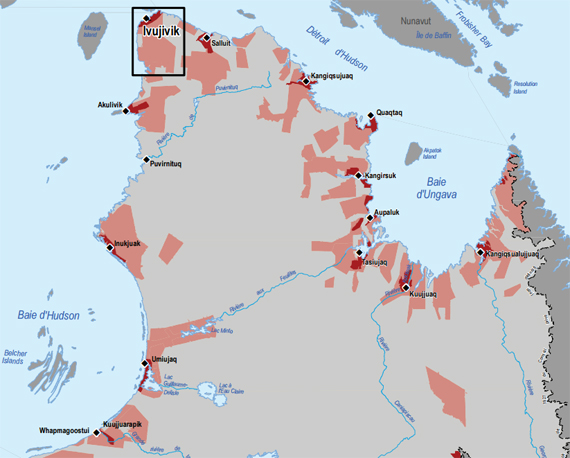
This is the land agreement. There are three territorial categories.
- Category I: Inuit and Cree have exclusive control, represented by the bright red color on the map
- Category II: Owned by the Quebec government, but the communities have hunting, fishing and trapping rights, represented by the pink on the map.
- Category III: Totally owned by the Quebec government. Any development projects can go through without the local communities’ approval. Represented by the grey on the map.
I see a bit of a disparity here. Now, this agreement is infinitely complex. At this time, I can’t get into it too much as this situation has enough content for a whole book. But, from the little understanding I have of this situation, it feels like the local communities were locked into small territories, with almost no way to expand. From what I heard, it has also contributed to the housing crisis as KMHB cannot expand outside Category I zones.
I had an illuminating conversation with Charlie Watt on the subject. He was the Inuit negotiator for the James Bay Northern Quebec Agreement back in 1975 and he was a senator from 1984 to 2018. In this conversation, we talked about local politics, specifically the need for Nunavik representation in lawmaking bodies. The Government of Quebec has complete lawmaking powers over the Nunavik region, with almost no Inuit representation and no experience with what the North is like. This disconnect between the governing body and the people’s needs up north is a dense issue that has been handicapping local development in Nunavik for a while now. But, if there was an independent lawmaking body up north, laws could be made for Nunavik communities with the same understanding locals have of their own territory.
This matter is as touchy as it gets because the James Bay Northern Quebec Agreement’s implications have caused a vast amount of consequences, positive and negative. But, since I have been exposed to this through the many heartfelt conversations I have had with locals, I will research it and work on a project that pertains to the consequences of this land agreement.
Nature is changing
Another gripping part of my conversation with Charlie Watt was about the environment, and how its changing into something that goes beyond ancient knowledge. Now, you may be asking, what does that mean?
Ancestral knowledge is information passed down by the elders to newer generations. Inuit people like many other indigenous communities use this process to perpetuate culture. Within this knowledge comes a deep understanding of the community’s local environment. When I mean deep understanding, I mean a grasp on nature’s ins-and-outs that is on par with scientists who have studied the environment their whole lives. However, its no surprise, since that knowledge has been nurtured and worked on for hundreds of generations.
Nowadays, this ancestral knowledge is being challenged. The environment is adapting to the new conditions we have imposed on it, meaning that the elder knowledge a community may have had on its local environment is now partly obsolete. The main example of that is weather. The practice of predicting weather is very common in communities with a history of sailing and hunting. They would be mostly accurate in any normal circumstances. But, as Charlie Watt said, it is becoming increasingly hard to predict weather. I myself found it difficult to predict it, even though I am studying weather in university.
From what I have observed, Inuit communities boat and camp quite regularly. Now, not only is the weather unpredictable, it is also increasingly intense. Ultimately, this will negatively impact these ancestral practices, and even make them dangerous.
This is only one example of many drastic environmental changes, and the list is only growing as time goes on. These changes include shifts in animal migratory patterns and marine life travelling, which in terms affects hunting and fishing knowledge that has been passed on for hundreds of years.
Aurora Borealis
Alright, so I witnessed some pretty awesome northern lights in Kuujjuaq.
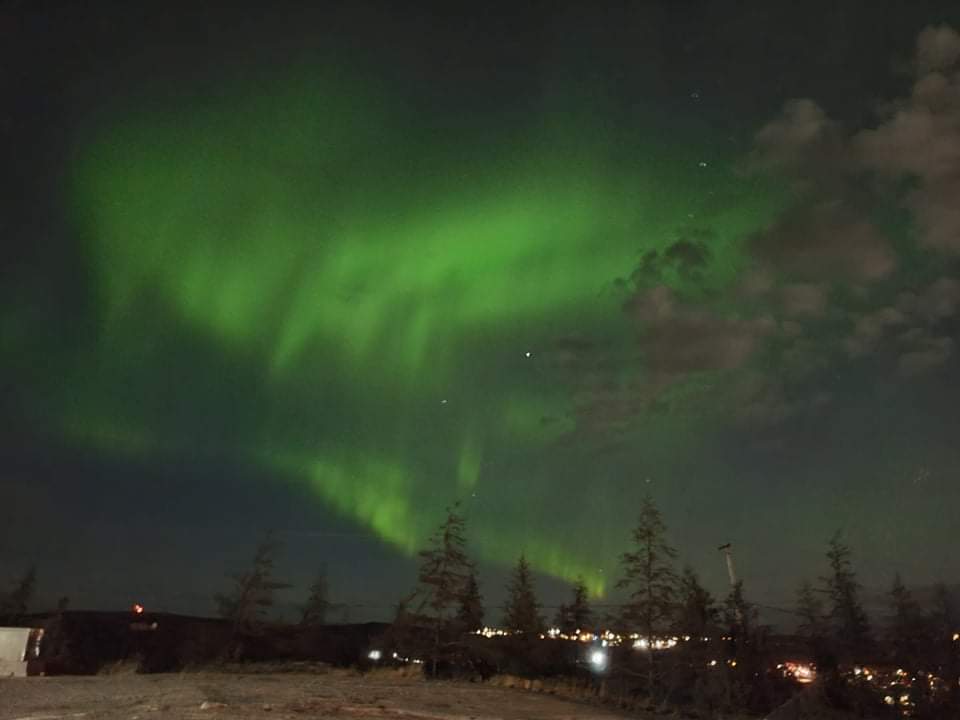
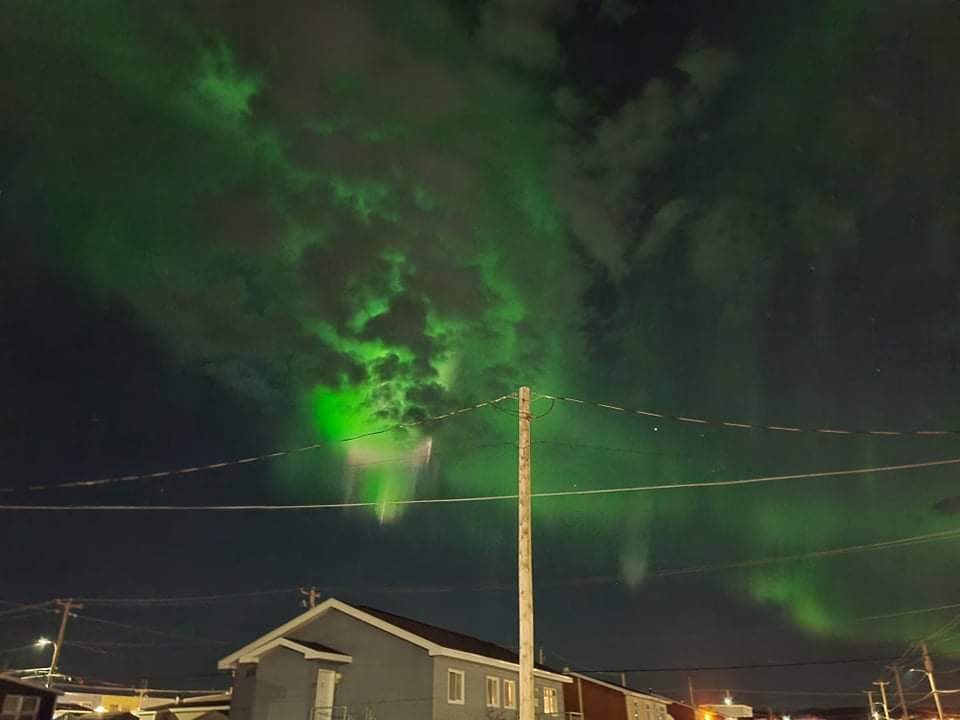
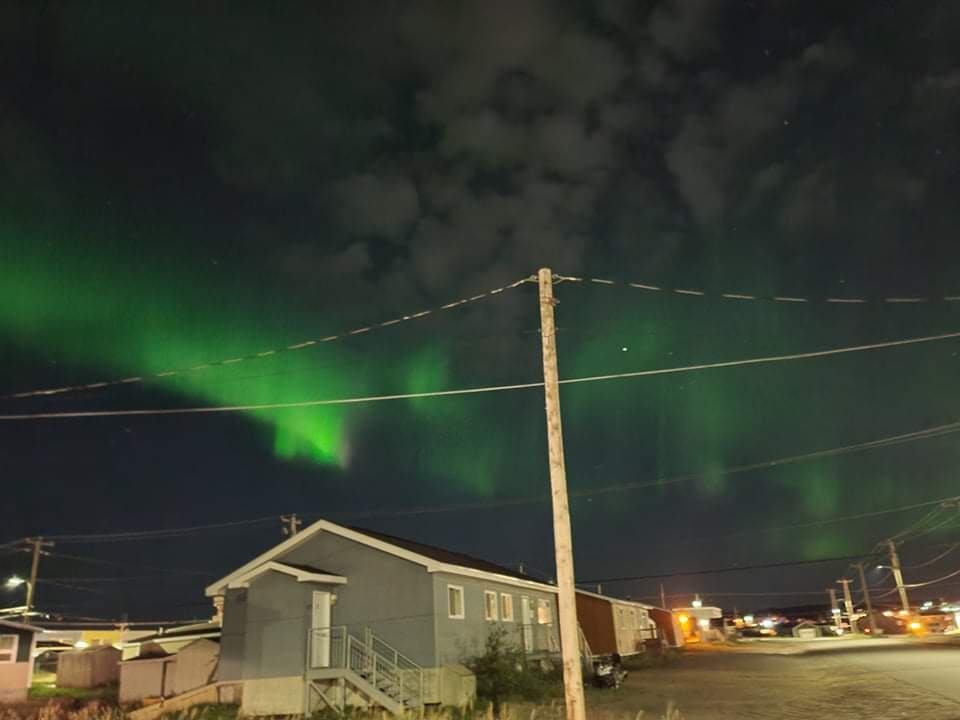
Last time I posted pictures of Northern Lights, I did not bother to explain the nature of their existence. Now that I am home and can do better research, I will shoot my shot and try to explain this phenomenon in an interesting way.
Surprisingly enough, the cause of these beautiful night lights is situated right in the middle of our planet, specifically its core. The inner core is a pressurized solid chunk of iron and nickel, but the outer core is a moving mass of molten iron. This gargantuan layer of moving iron then creates a magnetic field big enough to surround the Earth. It is called the magnetosphere.
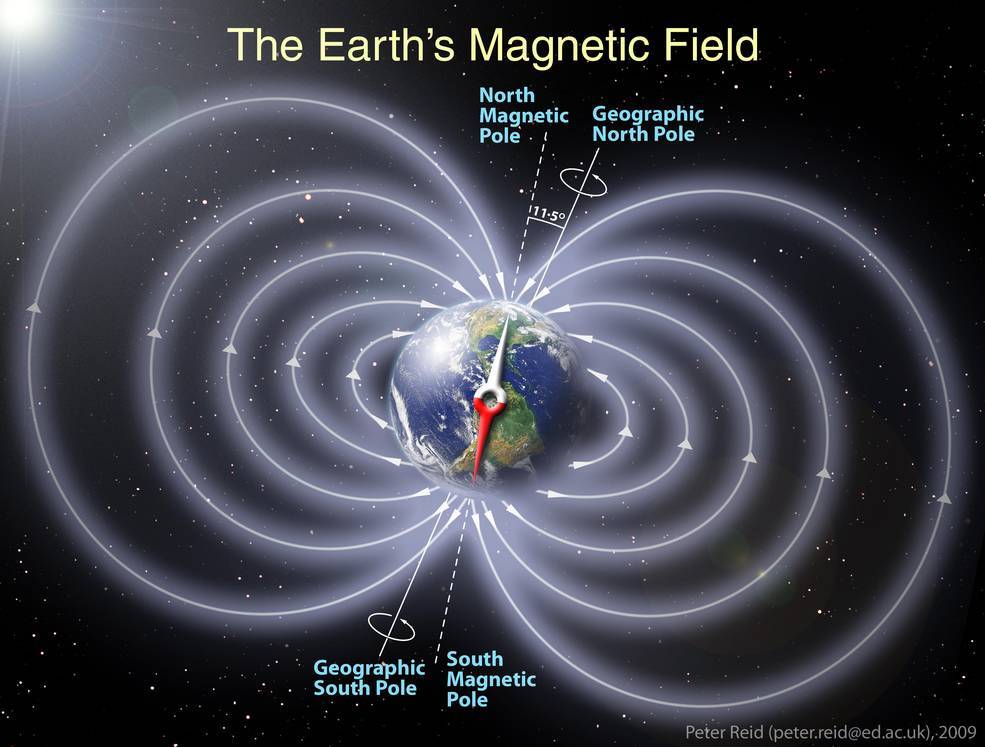
This magnetic field protects us from the Sun’s solar winds constantly blasting the Earth. Usually, the field does a pretty good job. But, as you can see from the image above, there are two significant weak points to the magnetic shield; the North and the South poles.
So, electrons from the solar winds will occasionally breach into the Earth’s atmosphere through the poles. When the said electrons come into contact with the atmosphere’s oxygen or nitrogen, a transfer of energy is made from the particle (Electron) to the molecule. (Oxygen or Nitrogen) In an attempt to balance itself, the molecules will externalize the extra energy into photons. Photons are the carriers of light, so, that process is how northern lights are created, and why they can only be seen near the poles.
Different situations emit different color patterns too.
- From 100 to 300 km in the atmosphere, when the electrons collide with oxygen, the common green lights will appear.
- Nitrogen at around 100 km high will generate pink and dark red colors.
- Oxygen between 300 and 400 km high will generate red northern lights.
- Blue and purple is caused by helium and hydrogen. It is rarer, and more difficult for us to see in the night sky.
Alright, that just about wraps up the whole trip. I still have my final words to put together, that might take a while to formulate though.
In hindsight, the blog was very helpful in giving me the drive to look deeper into this new culture that I was discovering, but trying to post daily was an absolute long shot. Overall, this has been a great experience not only for my personal growth, but for my journalism as a whole. This will remain on my website, forever immortalized as my first baby steps as a reporter in the north. Considering the life-changing fun I had whilst up there, I will most likely go again, and hopefully then as a full-time journalist.
Tavvauvutit!

 Gallant's Lounge
Leave a comment