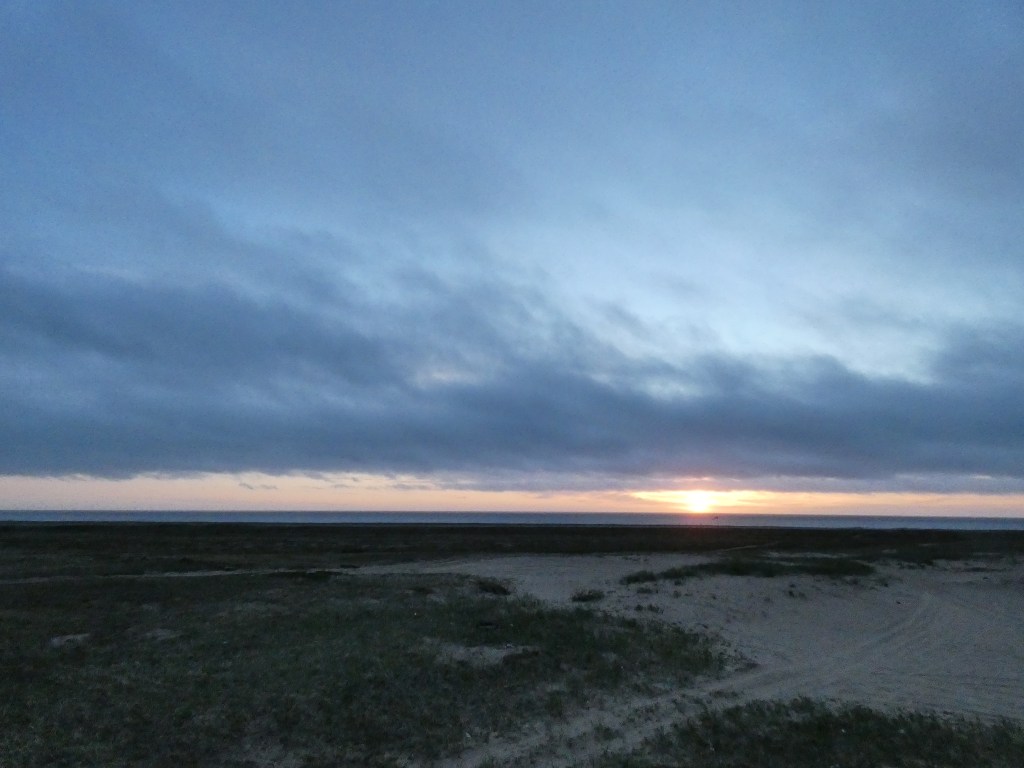
I am aware that I have already skipped a day. Bear with me, because we have been working like madmen out here.
But let’s begin, we have a lot to cover with many particular details that have made this adventure all the more interesting for me. We will begin with the more digestible facts and then we will start tackling some more complex topics later on.
Transportation
There are two main modes of transport out here with one public transport option. The public transport is a free bus that you can call to pick you up and drop you off, pretty neat. But if that isn’t your way to go, either you have a car or a 4-wheeler, and in the winter it is replaced by skidoos. From what I have heard, most of the cars here are sold secondhand and they are transported here by boat. Only a few are available each shipments, and the frequency I do not know.
However, especially for a new driver like myself, there is a staggering lack of circulation rules here. Stop signs are barely stopped at. Kids are driving 4 wheelers without helmets. Cars have no registrations and are often uninsured. People learn how to drive the good old fashion way, from their parents. Kids weave in and out of roads with their bikes and their dogs. Not what you see everyday as a Montrealer. But, this is nothing outrageous, it is very normal. The population is difficult to pin down, but it is less than 1500, meaning that at any point in time, there is not enough people on the road for circulation rules to be deemed helpful in any way. Accidents are rare, people are not driving fast. (except kids on 4 wheelers, they can be wild at times.)
I am saying this because me and my crew leader drove these streets ourselves. And this brings us to the second point, how did we get a hold of a car here? Let me tell you, because this has been quite the adventure in itself. Maybe an Enterprise, or a U-Haul can hook us up with a ride, no no…. That does not exist here. The only way was to ask around. Who can rent us a car here? We were given three options. Number one: We were told that the restaurant here could rent us a car, but it is only open in the morning and it only has one car available. We could not get that car, because circumstences. Number two: The hotel we are staying at has one Ford F-150. We were able to rent it for a day, but it is sparsely available as a lot of people in the hotel are trying to rent it. Number three: Brian Jones.
Brian Jones
Now, this guy needs a whole section for himself. When we talk about a legendary character in a community, he is the guy. The treasurer of Kuujjuarapik suggested this guy as a great option for a car rental. Thus, we tried to reach the guy. Well, turns out its not that simple to reach such a mythical figure. First we tried our receptionist, a great starting place. She gave us a number, but she said he might not be available. We were like okay, lets try. No answer.
We started to look him up on Facebook, because people are very active on the app, and it is often their main source of communication. No luck, but we saw that he worked at the airport, which was right in front of the hotel. We went there, asked the guys. They were like “Oh, good luck trying to find him he always on the go.” This is were we realized the legendary status of this man. He is the business mogul of Kuujjuarapik. He does delivery for every single company here. He takes his car, goes from the airport and transports almost all the packages himself. In addition to that, he rents out quite a wide array of cars, one of them being a decked out 2016 Ford F-150. Everyone knows this man, and every one says “Oh he’s always on the go, the only way is by email, and he might answer you.” Unfortunately, Brian was a no go, and we were left without a ride. Although, this ordeal was resolved through a favor deal with some of the hotel’s customers. They were here as exterminators, doing contracts in all the Northern communities. Turns out, that car was the 2016 F-150. It was a pretty sweet ride…
Scrap and trash
Trash management must be a headache in a half out here, no doubt. How do you even get rid of it? You can’t let it pile on because this could attract wild animals. So, trash is burned. Now, as an environmentalist, this does tickle my trigger bone, but at a certain degree I understand why they do it. However, what I don’t totally get just yet is how close the landfill is to the town. Like were talking 5 minutes walk. The blue smoke coming off the fire was windswept immediately in town, where everyone would inhale the fumes. At this point its more of a health hazard than an environmental hazard. But, there are plans to move it. The city is expanding, there is construction in a few places and that means the landfill has got to be pushed, which is good news in many ways.
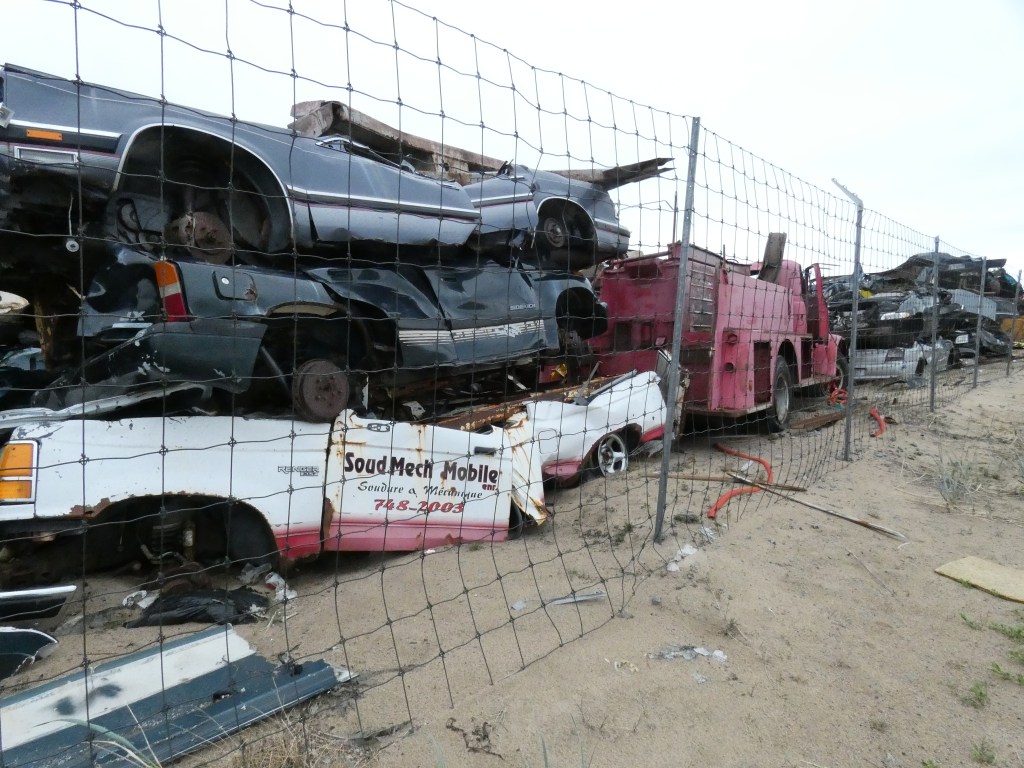
Now, lets talk about the scrapyards. These cars that eventually reach these shores through boats, its been like that for decades now. And these cars, trucks, construction vehicles, they eventually break down. There is a mechanic, but a 40 year old car remains a 40 year old car, and it eventually dies. Yet, they cant get rid of it. We have discovered 2 scrapyards so far, filled to the brim with ancient relics of a time gone by. Cars come in but never get out, meaning that this is a piling on that will go on forevermore if not resolved. This needs more investigating later on.
Nature-altering landslide
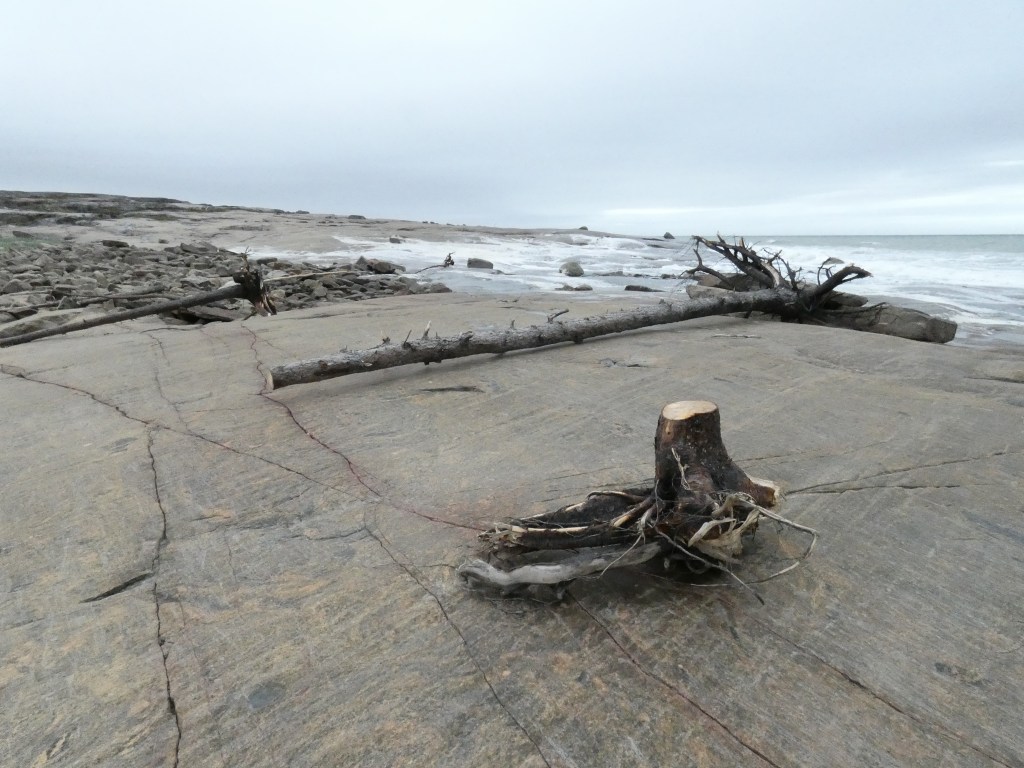
One of the largest landslides in the province happened a few months ago just a few kilometers away from town. No one was injured and no houses were engulfed. But, the consequences of this landslide are very apparent. The river next to town has a brownish tint, that’s unusual. Most of the water is muddy and opaque. This has had tremendous impacts on the community, because there are hardly any fishes around, and I was told that the few fishes that were caught were barely comestible. The sheer amount of sand and soil that was pushed into the water in such a small lapse of time has completely saturated the sources with minerals and sand, and has driven away the aquatic life for a while that’s for sure. I have yet to reach the landslide, but proof of its existence is seen on the shores of the Hudson’s bay, where you can find whole trees, from roots to tip, laying there.
The impact that this event had on the people and on the environment is one of my main leads that I will try to uncover. This needs more investigating
Two Communities, One Town
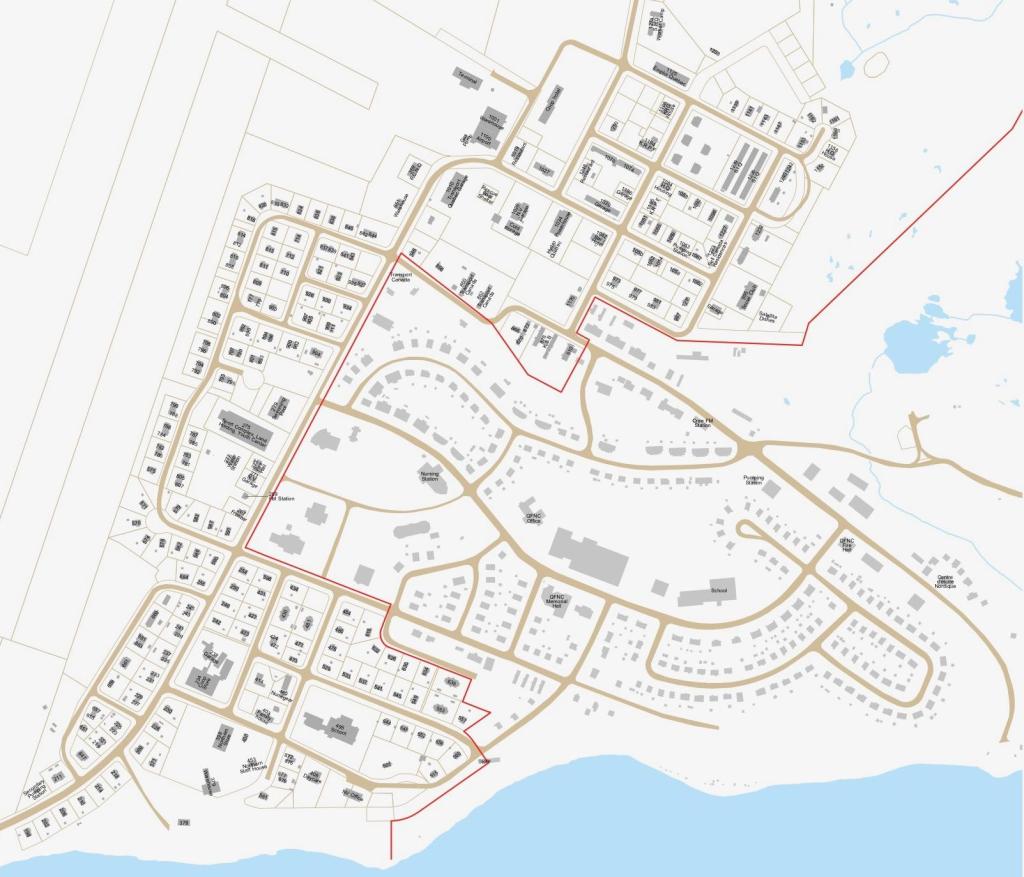
This is where things get complicated. I’ve been saying to people that my current location is Kuujjuarapik, but it is not that simple. Two First Nations communities live here, the Inuits, and the Crees. But, they don’t share the town. Kuujjuarapik is the Inuit side, and Whapmagoostui is the other side.
Both are delineated by a clear line shown on almost every map. Both have their own local governments and educational system. Street names change from one side to the other. The urban planning is different on each side and a Cree house differs from an Inuit house.
Through my talks with people here, the two communities now live in harmony together. There is no bad blood, they share many communal spaces together. But, this topic needs a lot more studying, because this is a complex social particularity unique to Whapmagoostui/Kuujjuarapik, and cannot be explained fully just with the few conversations I have had. I will try to put this in better words later when I will get to speak with the contacts I have established.
This is it for now. Quite an array of topics we covered today. I will try to get one out tomorrow, but if there is not enough content, I will combine it with the day after.
See you later.
 Gallant's Lounge
Leave a comment